We see the best
in you

5xFive uses AI to amplify the strengths that make each person distinct, so information adapts to the most effective method of understanding, for them.

We are clear about what we believe

01
Our Vision
A future where each person is valued for the strengths and talents that make them distinct and uniquely suited to thrive in a world augmented by intelligent technologies.
02
Or Mission
We build technology that
re-humanizes how we live, work, and learn by amplifying innate skills and tailoring information to how people think, discover, and understand.

Our origin

Our founders didn't build this company to solve an abstract problem. A truly neurodiverse group of individuals that realized their systemically pre-defined abilities (or lack thereof) were not the problem; it was a system built for only one kind of learner - one-size-fits-all.

Those insights stayed with each one individually over the next 20 years. As teachers, coaches, and technologists with graduate training in cognitive psychology and five patents in accessibility and human-computer interaction, they built products at Amazon, Microsoft, Adobe, Audible, and Pearson. Across each, they noticed a similar pattern: talented people overlooked, systems missing real strengths, and organizations losing capabilities because they couldn’t recognize the misalignment.

In World War II, radio operators used “5x5” to mean a signal was perfectly understood: loud and clear. By war’s end, it came to represent something more: true understanding, not just transmission. That idea is why 5xFive exists. Getting information to someone isn’t the same as getting it through to them. We’re built for that difference.


The people building a new era of understanding

Trip O'Dell
Founder & CEO

Trip directs 5xFive's strategic vision and champions its mission to re-humanize human potential through intelligent technology. A former teacher and coach, he spent two decades in leadership roles at Amazon, Microsoft, Adobe, Audible, and Pearson, building large-scale products across education, accessibility, and personalization. He holds graduate training in cognitive psychology and five USPTO patents in accessibility and human-computer interaction.

"5xFive exists to address the waste of potential and talent in society by using intelligent technology to mitigate weaknesses, amplify unique strengths,
and level the playing field for everyone."
John Dangov
Co-founder & CTO

ohn leads 5xFive's technology strategy and architecture, turning the Understanding Engine into a platform that performs, scales, and stays secure in real deployments. He brings more than 30 years of experience across AI, machine learning, and distributed systems, including senior roles at Amazon, Microsoft, and Goldman Sachs. John was the founding CTO of Tamarac Inc., where he built portfolio optimization software
100 times faster than competitors and helped drive
a $55 million acquisition."

"I'm dedicated to our mission to help people absorb new information by identifying their strengths, with
a focus on efficiency, cost-effective services, and democratizing information."
Carla Pirone
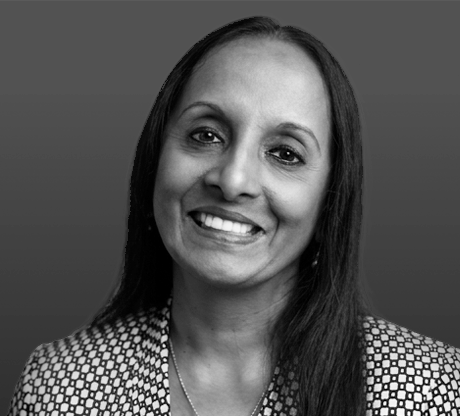
Co-founder & CXO

Carla directs customer experience at 5xFive, applying data-driven insight, growth strategy, and
cross-functional leadership to build a customer-centered organization. She spent three decades at Microsoft leading accessibility, security, compliance, and globalization, including expanding the Local Language Program from 35 to more than 108 languages to broaden access for billions of users. Carla built compliance systems that still operate across billion-dollar environments today.

"5xFive's promise of changing people's lives and impacting the world through technology makes
me proud."
Kevin Kimener
President

Kevin brings more than 20 years
of leadership experience across defense, government and enterprise environments, beginning as a U.S. Marine Officer leading, training and developing teams and foreign military partners. He later held roles at Fortune 500 companies supporting mission-critical programs at the federal level, and founded a security consultancy company, winning competitive state-level awards in partnership with industry leaders.

"5xFive is doing what people initially assumed AI would do, assisting people in becoming smarter and more efficient."

Frequently asked
questions

What is the understanding crisis?
Organizations apply one standard way of communicating and learning across people who think and process information very differently. That mismatch creates miscommunication, and the cost compounds across every interaction, training session, and decision. The problem is not that people lack capability. It is that the system was never designed to recognize their potential.
What is the measurable cost of this problem?
In industries like education, healthcare, and enterprise, the annual cost of miscommunication and misunderstanding exceeds $2.7 trillion. That figure reflects lost productivity, failed training outcomes, avoidable clinical errors, and the downstream economic cost of people whose potential was never reached because the system couldn't see it.
How are organizations dealing with this challenge?
Most double down on standardization, scaling training and messaging for the average person, and relying on screening systems that overlook real capability. The approach produces consistent delivery and inconsistent outcomes. Organizations spend more on the same solutions and measure success by completion rather than comprehension
Why is now the right time to address the problem?
Intelligent technology has driven down the cost of scaling personalized comprehension to the point where it is no longer a resource constraint; it is an architectural choice. Organizations that make that choice now can close comprehension gaps faster, align teams sooner, and deliver better outcomes with less wasted time, misapplied talent, and budget. The question is no longer whether personalized understanding is possible at scale. It is whether organizations will build for it.

Our principles
and what we commit to

Care for the whole person - "Cura Personalis".
Cura Personalis is not a tagline or a nod to tradition. It is the standard we hold ourselves to when no regulation requires it,
and no one is watching. The person on the other end of our technology has a history, aspirations, a story, and sensitive information that must be protected by design, not by a privacy policy that can be changed.
  • We will not aggregate behavioral data to place people in categories.
  • We will not optimize for the metric that keeps users on platform the longest.
  • We will not design systems that reward conformity by making it the path of least resistance.
User-controlled - your data is your property.
It is a sovereign asset that goes where you go. The information your cognitive profile contains is yours to use, yours to share, and yours to take back. We back this commitment with technical architecture that makes unauthorized use structurally impossible, not just contractually prohibited, because a promise written in terms of service is only as strong as the company's incentive to maintain that same promise.

  • We use your data to amplify your strengths and bridge gaps.
  • We do not sell it, mine it, or use it to train models for anyone else, not now, not ever, regardless of what becomes commercially expedient.
  • In a world of data breaches, algorithmic profiling, and systems built to extract value from user behavior, your control over what is known about you is the foundation of our business model.
  • Your trust is not a resource we exploit. It is the asset we protect.
Adaptive - we map how you think to serve not sort.
The goal of cognitive profiling at 5xFive is comprehension, not consumption. We learn how you process information so we can transform content to fit that process, not so we can predict your behavior, monetize your attention, or nudge you toward outcomes that benefit the platform more than they benefit you.
  • We will not aggregate behavioral data to place people in categories.
  • We will not optimize for the metric that keeps users on platform the longest.
  • We will not design systems that reward conformity by making it the path of least resistance.
Accountable - our products have consequences.
We start with the hardest use cases because systems that work for the people with the most to lose work for everyone. Ethical review is part of our workflow from the first line of code, not a gate check before launch.

  • We will not ship models we have not stress-tested against the cases where failure costs the most: the neurodiverse learner, the veteran navigating a system that doesn't recognize their experience, the patient trying to follow discharge instructions they don't fully understand.
  • We will not release products into education, workforce development, or clinical settings without human oversight mechanisms for bias detection.
  • We will not treat scale as a reason to reduce accountability.
Transparent - you deserve to know how this works.
You will be able to see how your profile shapes the content you receive. We document how our systems are built, what they are designed to do, and where their limitations are. We tie our revenue to outcomes: faster comprehension, reduced miscommunication, measurable growth, not to data extraction.

  • We will not build systems whose reasoning is hidden from the people it affects.
  • We will not generate revenue by monetizing your behavior in ways we haven't disclosed.
  • We will not use the phrase "proprietary methods" as a shield against questions we should be able to answer.
Empowered - the goal is your capability.
The Understanding Engine is designed to make you more capable on your own. You provide the judgment. You make the decisions. We amplify what makes you distinct, and we measure our success by whether you achieve better outcomes on your own terms, not by how long you stay inside our platform.

  • Every person has strengths that make them uniquely suited to contribute.
  • We will not build systems that label people as deficient because they don't match an arbitrary standard.
  • We will not create dependency: platforms that make themselves necessary by making the user less capable without them.
  • We will not allow AI to accelerate inequality by delivering advantages only to those who already have them.